Potassium: Heart Health Is a Matter of Balance

When heart health comes up, conversation usually turns to cholesterol, salt, or saturated fat. Potassium, however, rarely shares the spotlight—despite being one of the most essential minerals for cardiovascular function. In this post, Moondust Cosmetics® shows how potassium plays a direct role in regulating heart rhythm, maintaining healthy blood pressure, and supporting proper muscle and nerve signaling. Read on for tips to get this foundational element in how the heart and blood vessels work in everyday foods.
Potassium vs. Sodium: It’s About Balance, Not Elimination
Public health messaging has long emphasized reducing sodium. It is often simply framed as “salt is bad.”
Sodium, however, is only part of the equation. Potassium and sodium work together to regulate fluid balance and blood pressure. Sodium tends to increase fluid retention; potassium helps the body release excess fluid and counteracts vascular tension. When diets are high in processed foods, sodium intake climbs while potassium intake drops. Blood pressure then tends to rise. Supporting potassium intake helps restore balance rather than forcing restriction or pushing the body to extremes.
How Potassium Helps Blood Vessels Relax
Potassium plays a critical role in helping blood vessels widen and relax, a process known as vasodilation. When potassium levels are adequate, blood vessels respond more efficiently to signals that tell them to loosen, allowing blood to flow with less resistance. This reduces strain on the heart and helps maintain healthier blood pressure over time. Potassium also supports the electrical signals that keep the heart beating in a steady, coordinated rhythm. Too little potassium can interfere with these signals, increasing the risk of irregular heartbeats—another reason this mineral matters far beyond basic nutrition.
Many people are aware of elements like calcium and vitamin C and meet recommended intake, but potassium often falls short in our daily diets.
Food Sources First – and Why Supplements Aren’t Always the Answer
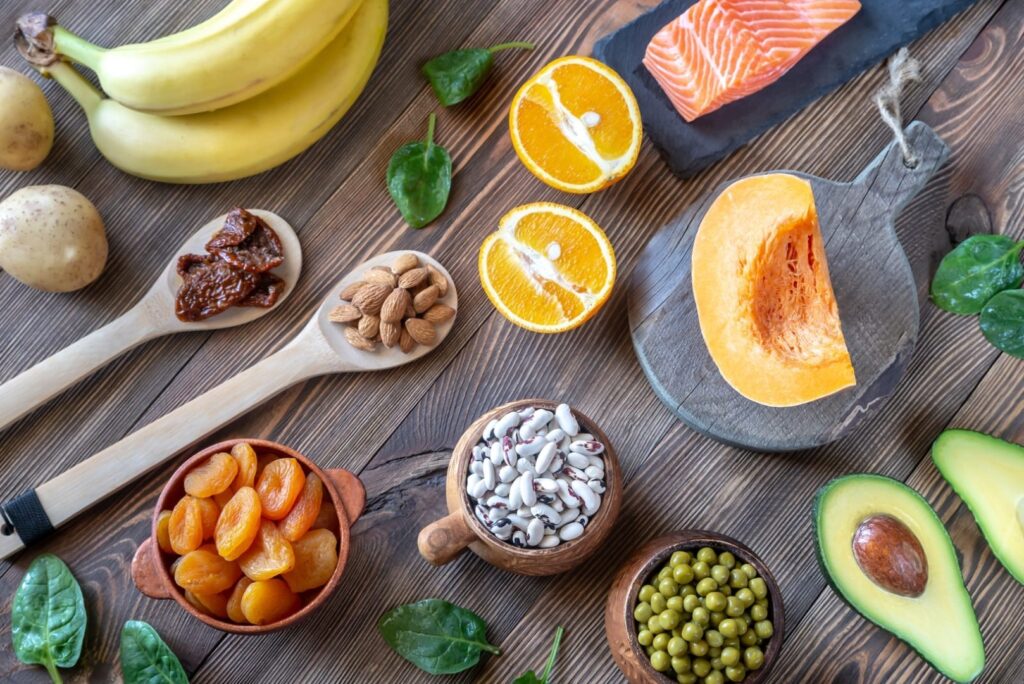
Potassium is widely available in everyday foods. You don’t need exotic powders or specialty supplements. Beans, lentils, leafy greens, potatoes, squash, tomatoes, yogurt, bananas, citrus, and avocados all contribute meaningfully to intake. These foods deliver potassium alongside fiber and other nutrients that support heart health as a system. Supplements are not appropriate for everyone.
Dr. Moondust note of caution: Most people are best served by getting potassium from whole foods. Potassium supplements are rarely necessary and should only be used with medical advice, especially in people with kidney disease, and certain heart conditions. In those taking specific medications, excess potassium can be harmful and, generally, excessive potassium levels in the blood can cause cardiac arrest. This makes potassium a clear example of why nutrition works best when it starts with real food, not shortcuts.
Heart Health and Valentine’s Day’s Grand Gestures
Valentine’s Day, emphasizing connection and care, falls during Heart Health Month, a time when cardiovascular health moves into public focus, briefly. Both events have a lot in common. Ideally, our overall wellness could benefit and respond to each in balance, moderation, and consistency!
Potassium reflects that principle well. It doesn’t promise quick results or visible transformations, but it quietly supports the conditions the heart needs to function well over time. During Heart Health Month, the most meaningful message may be this: taking care of the heart isn’t about perfection or restriction—it’s about maintaining balance in the systems that keep us going.
Wrap up on care from Dr. Moondust: Valentine’s Day reminds us that health, like any strong relationship, flourishes on balance and not just indulgence for one special occasion. Not eliminating salt, not chasing extremes, not relying on quick fixes—but supporting the body’s natural systems so they can do what they’re designed to do. When sodium and potassium work together, the heart beats more easily, blood flows more smoothly, and the body stays in rhythm. That kind of balance isn’t flashy—but it’s sustainable, protective, and deeply caring
For more tips and healthy habits to get you through any of the seasons, visit our website and in our socials!
Join us on social media
Facebook, Instagram, YouTube.
Drop a line to comment or send in a question (EMAIL) info@moondustcosmetics.com