Cancer Prevention, AI and the Work of Canadian Researcher Yoshua Bengio
Every calendar month features a different ‘cancer awareness’ theme, or special days to focus on specific cancers, yet the story of cancer in the 21st century is no longer just medical. It is economic, technological, and deeply personal. A landmark analysis published in JAMA Oncology estimates that cancer will cost the global economy over $25 trillion between 2020 and 2050, an impact comparable to a forever tax on humanity’s future. That number means that cancer is still largely detected too late, treated too expensively, and prevented far too little.
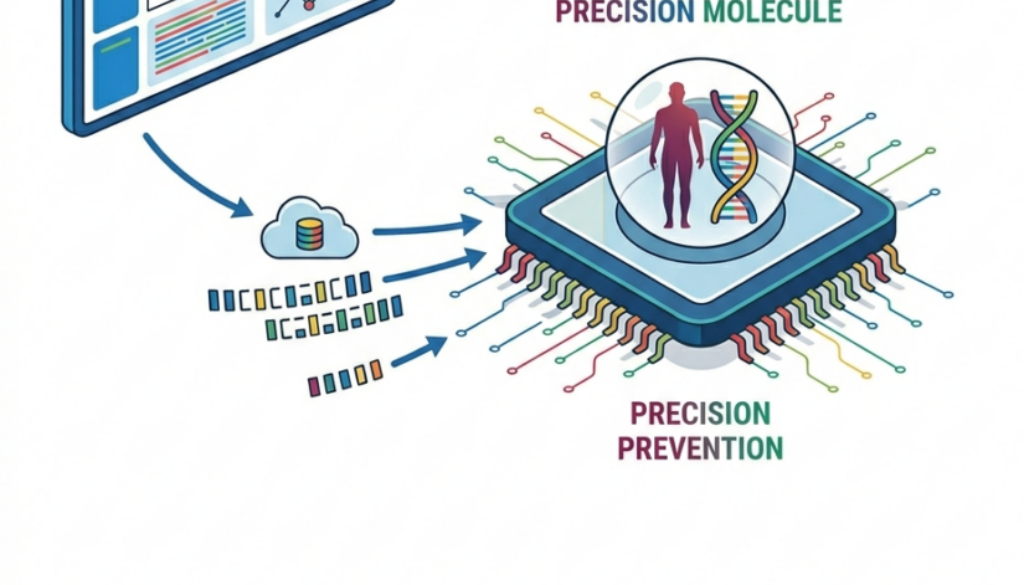
A significant shift is being pioneered by thinkers like Yoshua Bengio. It is a move from a reactive system to one that anticipates risk, detects early signals, and intervenes before disease takes hold. This is the beginning of what some researchers call precision prevention.
Moondust Cosmetics® founder and cancer biologist, Dr. Moondust, whose focus has always been on cancer prevention and non-invasive cancer treatments, invites readers to explore this two-part series which highlights Bengio’s work on AI as a diagnostic cancer tool. The second part in May will focus exclusively on skin cancer – AI’s role in furthering cancer detection while Moondust Cosmetics offers insights into practical behaviours and habits to help prevent skin cancers and sustainable natural suncare.
Part one
Yoshua Bengio, is one of the foundational figures behind modern AI—and his connection to cancer is less about being a cancer researcher himself and more about building the tools that are now transforming cancer science.
Who Bengio is (and why he matters here)
Bengio is a professor at Université de Montréal and founder of Mila – Quebec Artificial Intelligence Institute—one of the world’s leading AI labs. He’s also a Turing Award winner (a prestigious aware in computing) for pioneering deep learning.
This matters as deep learning is the engine behind modern medical AI. It is what allows machines to learn from massive biological datasets (DNA, imaging, etc.). So, despite Bengio not running cancer clinics, his work underlies today’s cancer breakthroughs.
How his work connects to cancer research
AI is virtually a means to find the proverbial “needle-in-a-haystack.” According to Bengio, AI can help uncover what causes cancer and what might cure it.
In practical application, AI is capable of scanning huge genomic datasets (including genes and mutations). It can find patterns humans can’t catch easily and it can link those patterns to cancer behaviours and response to treatments.
Drug discovery at massive scale
His specialization’s deep learning models can:
- Simulate billions of molecular combinations
- Predict which compounds might fight cancer
- Cut years off traditional drug discovery
There is a great time saving as AI runs virtual experiments at scale and is not limited to testing one molecule at a time.
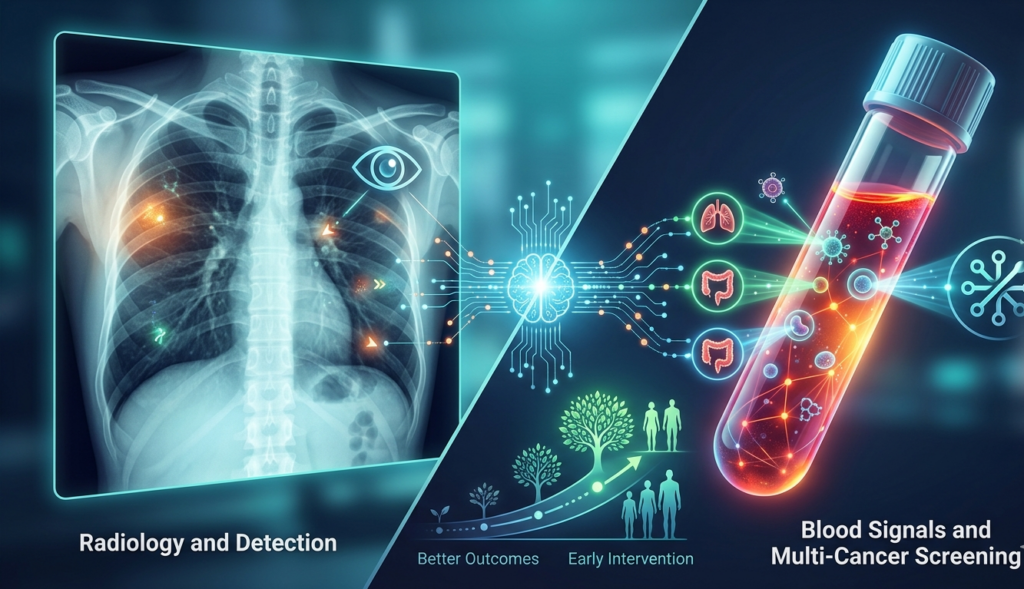
Early detection and diagnostics examples where AI is being applied:
- Medical imaging (detecting tumors earlier)
- Blood-based biomarkers
- Multi-cancer screening tools
Early detection is understood to be one of the biggest predictors of survival and AI can offer personalized cancer treatment. This is due to its powerful capability to consume data sets and then analyze and provide personalized plans for individuals faced with cancer. It can integrate a patient’s history, their genetic data and tumor characteristics. Just in this example it can then recommend which therapies are most likely to work and equally as important, which ones to avoid.
This shift leads us to the field of precision oncology.
Bengio’s focus, however, is less about specific diseases and more about how to build safe, reliable AI systems. In all this he, and other scientists advancing AI are also mindful of concerns.
“AI scientists”, for example, are automated systems that generate hypotheses safely without acting in the real world. This matters for cancer as future breakthroughs may come from AI generating new biological theories. The concern is that the systems must be trustworthy and aligned with human values. Bengio’s long-term thinking includes questions such as: Can AI cure cancer? AND can we trust AI doing the research?
Canada has a central role in this story as it is becoming a global hub for AI in healthcare, especially in Montreal, because of Bengio and institutions like Mila. The work integrates academia, healthcare systems, startups and government funding. Together, they result in an ecosystem allowing rapid translation from theory to the creation of real cancer tools.
Bengio didn’t set out to cure cancer but he helped invent a way for machines to learn from complexity and to detect those patterns we acknowledge are beyond human perception.
That capability is now being applied as we have seen to cancer biology, drug discovery, diagnostics and ultimately, personalized medicine.
Learn more about Bengio in this introductory TED Talk video
Stay tuned for part two in May on best practices to prevent skin cancer, and how AI assists us there also.
Find more tips about the simple ways balanced eating patterns and lifestyle choices support our health on the Moondust Cosmetics® website.
Join us on social media
Facebook, Instagram, YouTube.
Drop a line to comment or send in a question (EMAIL) info@moondustcosmetics.com