Could a Daily Multivitamin Actually Slow Your Biological Clock?

New research published in Nature Medicine says yes, and it is gaining attention in the longevity and wellness communities. Moondust Cosmetics® post looks at some of the findings and how they go beyond just ageing. Multivitamins are having a moment again in wellness culture. In today’s post, we touch on what the new science says about cellular health, skin, cancer and the biology of ageing around the daily habit of a multivitamin, especially in our fast-paced, stressed world.
What the Study Found
Researchers from Mass General Brigham, publishing in Nature Medicine (March 2026), analyzed DNA data from nearly 1,000 adults with an average age of 70 who were enrolled in a large-scale randomized clinical trial called the COSMOS study (Cocoa Supplement and Multivitamin Outcomes Study). Participants were split into four groups: some took a daily multivitamin, some took a cocoa extract supplement, some took both, and some took placebos.
After two years, those taking a daily multivitamin showed measurably slower biological ageing — roughly four fewer months of ageing over the study period compared to those on placebos. Two of the five biological ageing clocks measured showed statistically significant slowing, specifically the ones most closely associated with mortality risk. For the full study as posted in Nature Medicine click here.
The cocoa extract, interestingly, had no meaningful effect on any of the ageing clocks.
What Is a “Biological Clock,” Exactly?
Your chronological age is simply how many years you’ve been alive. Your biological age reflects how quickly your cells and tissues are actually ageing, which can diverge significantly from the number on your birth certificate.
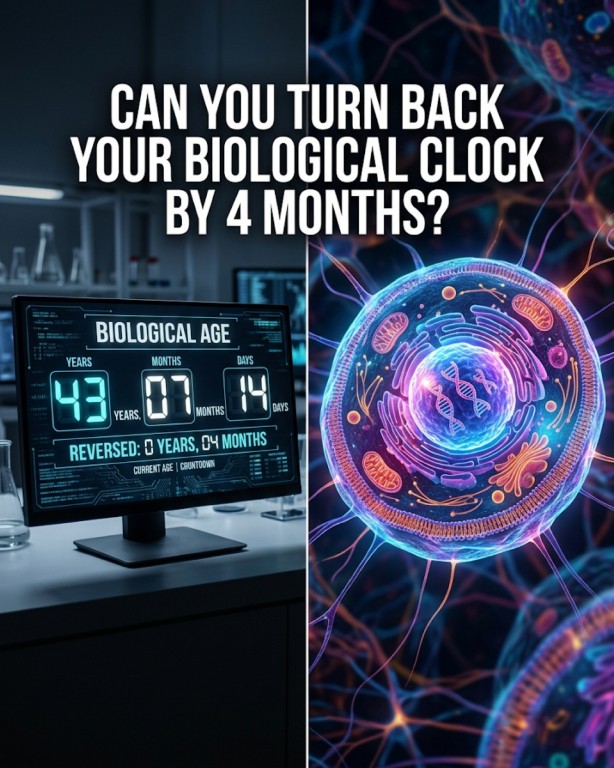
Scientists measure biological age using epigenetic clocks. These tools analyze tiny chemical changes on your DNA called methylation. These chemical tags shift in predictable patterns as we age, and researchers can read them like a speedometer for cellular ageing. Crucially, these clocks have been linked to real health outcomes: people with faster biological ageing tend to face higher risks of chronic disease and earlier death.
You can also imagine the experience of knowing that a car is 10 years old, versus the knowledge of its mileage. The same make and model year (like a human body of the same age) might have 200,000 km of hard wear and tear versus one that, through its DNA and care and feeding over a lifetime, registers only 120,000 km. For a more detailed explanation of biological and chronological age and facts check out the Mayo Clinic post.
Who Benefits Most?
Interestingly, the people who benefited most were those who were already ageing faster than expected. On one of the key mortality-linked clocks (PCGrimAge), participants who were biologically older than their chronological age at the start of the study saw nearly twice the slowing effect compared to those who were ageing normally.
This suggests that the multivitamin may be working by correcting a nutritional deficit rather than simply supercharging an already-healthy system. In other words, if your body is running behind, a daily multivitamin might help it catch up. And this was the original idea of the well-formulated multivitamin: to help supplement any areas of deficiency, rather than be a magical bullet.
Why This Matters for Skin, Too
Skin is not separate from the rest of our biology. The same nutrients that support your brain, immune system, mitochondria, and DNA repair pathways also help support collagen production, skin renewal, barrier function, and recovery from environmental stress.
Healthy skin is not built only from ‘beauty nutrients’ in products applied externally, but rather the internal biological necessities of raw materials your cells depend on to repair and renew themselves (see May post here on skincare). B vitamins help support cellular energy. Vitamin C plays a central role in collagen synthesis. Zinc supports healing and repair. Vitamin D influences immune regulation and inflammation.
Every day, your skin responds to UV exposure, pollution, oxidative stress, inflammation, sugar, sleep quality, hormones, hydration, and nutrient availability.
Why This Matters for Cancer Awareness
Recent research is finding connections with daily multivitamin use to broader disease prevention. The COSMOS research team has previously found signals suggesting multivitamin use may be associated with reduced lung cancer risk, as well as improved cognition and lower cataract risk.
Our biological ageing is increasingly understood as a root driver of many chronic diseases, including cancer. When cells age faster than they should, DNA repair mechanisms weaken and our immune surveillance declines. The cellular environment becomes more hospitable to disease.
In fact, Dr. Moondust has studied the connection between, nutrition, ageing, and cancer in this recent chapter - An Introduction to Heavy Metals and Oxidative Stress in Ageing & Cancer: A Role for Detoxification through Diet (Springer)
The results to date show a four-month slowdown in the ageing process over the two-year use of multivitamins. Still, even a modest slowing of the ageing process has genuine public health implications.
As the researchers note, extending a healthy lifespan by even one year is estimated to save $38 trillion (about $120,000 per person in the US) in healthcare costs across the US population. A daily multivitamin is about as accessible and low-cost as preventive health interventions get.
Researchers, however, have yet to fully understand how a four-month slowdown in biological ageing translates to tangible health outcomes. As lead researcher Howard Sesso, ScD, MPH, put it: “We still need to understand what an improvement in biological ageing feels like beyond our DNA.”

Note: The study was primarily funded by the US National Institutes of Health, was independently conducted, and peer reviewed. Some study authors received grants from supplement and nutrition companies, including the manufacturer of Centrum Silver, which was used in the trial.
The team plans to investigate whether the epigenetic slowing persists after the trial ends, and to dig deeper into how these findings connect to clinical outcomes like cancer, cognitive decline, and cardiovascular disease.
Lessons for daily health: We can take away that many of us may be insufficiently nourished at the cellular level. Even though the study participants were seniors, some of whom markedly improved their biological age, we can all benefit from being aware of the challenges of modern nutrition.
These factors may contribute to deficiencies
- Stress
- Highly processed diets
- Restrictive eating patterns,
- Digestive changes with age, medications, and indoor lifestyles
- Depleted soils, too, can lower nutrient intake or absorption over time
- And ageing itself changes how the body absorbs certain vitamins, especially B12
This study indicates that a simple, inexpensive supplement could contribute to healthier ageing at the cellular level, especially for those whose bodies are ageing faster than expected. For anyone paying attention to longevity, cancer prevention, or simply living well for longer, that’s a finding worth knowing about.
This post and the article cited are for general informational purposes and is not a substitute for professional medical advice. Content of this post is based on: Li S. et al., “Effects of daily multivitamin–multimineral and cocoa extract supplementation on epigenetic aging clocks in the COSMOS randomized clinical trial.” Nature Medicine, Vol. 32, March 2026
For more posts on the irreplaceable habits of healthy food, movement, sleep, or sun protection for our health, visit the Moondust Cosmetics® website.
Join us on social media
Facebook, Instagram, YouTube.
Drop a line to comment or send in a question (EMAIL) info@moondustcosmetics.com