Phosphates 101: The Mineral You Eat, Drink, and Grow Your Food In
If you’ve read Moondust’s post on regenerative farming this month, you already know that healthy soil is the foundation for everything on your plate. This post’s focus is on phosphate, one specific element of that foundation. Why? Because phosphates are everywhere and they’re essential, but few outside a chemistry or agronomy class could tell you what they actually are. Read on to learn more about this quiet element that has a role in all aspects of your daily life.
What a Phosphate Actually Is
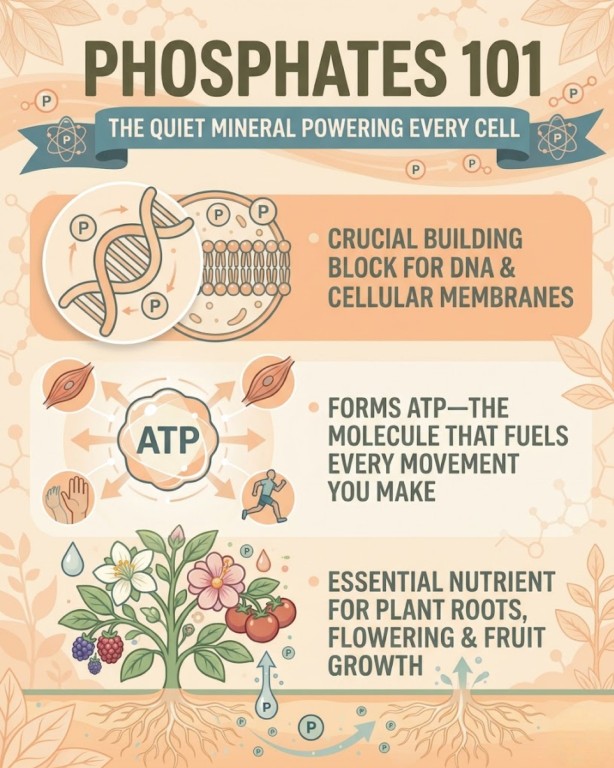
Phosphate is simply a compound built around phosphorus, one of the handful of elements every living cell needs to function. Phosphorus is a core ingredient in DNA, in the membranes that hold your cells together, and in ATP. Adenosine Triphosphate is the molecule that powers essentially every action your body takes, from blinking to running a marathon. Plants need it, too! They use phosphates for root development, energy transfer, and reproduction (flowering, seed and fruit formation).
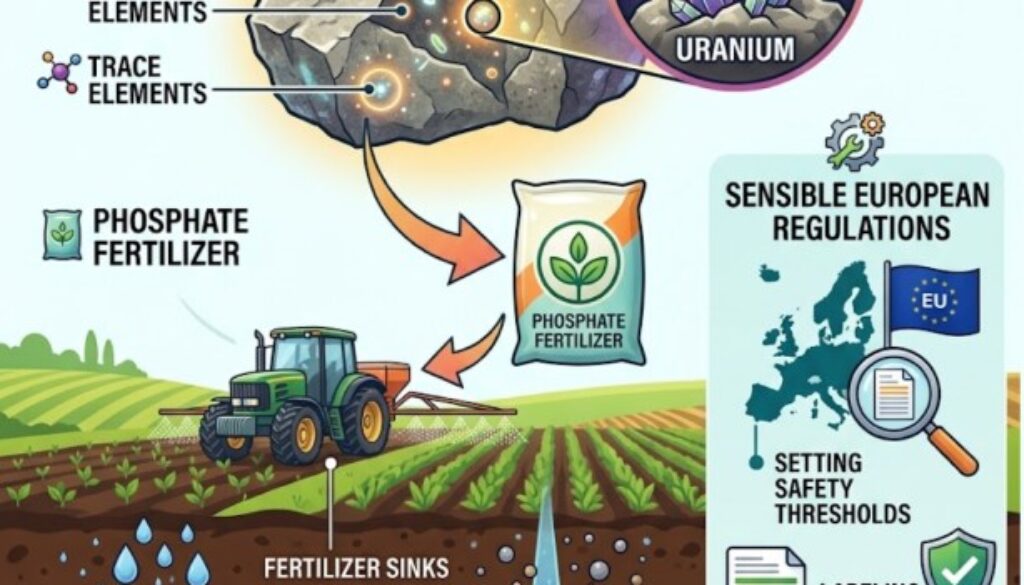
Because phosphorus is so fundamental to growth, it’s also one of the “big three” nutrients required in agriculture, alongside nitrogen and potassium. If you farm or even garden, you might have seen the N-P-K on every bag of fertilizer. Most of the phosphorus used in farming comes from mined phosphate rock. It gets processed into the fertilizers that get spread on fields worldwide. And it is that very mining-to-field pipeline that leads us to today’s post and understanding the impact of phosphates.
Where Consumers Actually Encounter Phosphates
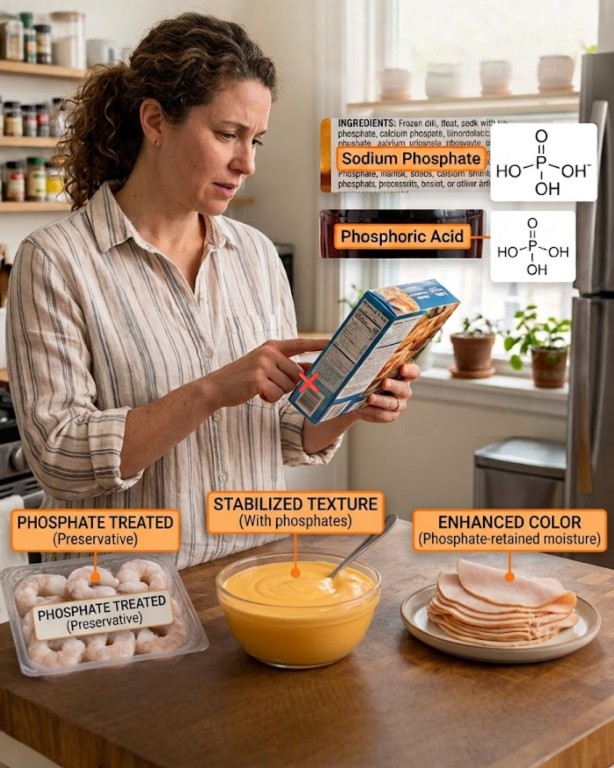
Most people assume phosphates are a “farm-based thing” that stays out in the field. In reality, they are as stated above in our daily lives. These are the ways in which they show up:
In the food supply, indirectly. Phosphate fertilizer helps grow the crops that become our groceries, so trace amounts naturally pass from soil into plant into plate. This is a normal and expected process as both plants and the human body need phosphorus.
In processed food, directly. This is the bigger one most people don’t know about. Phosphate additives (look for ingredient names like sodium phosphate, calcium phosphate, or phosphoric acid) are used throughout processed and packaged foods. They are the preservatives, leavening agents, texture stabilizers, and color enhancers. You’ll find them in deli meats, baked goods, processed cheese, canned goods, and cola-type sodas. Nutrition researchers have flagged that these added phosphates are absorbed by the body far more efficiently than the naturally occurring phosphorus in whole foods. This in part is why some clinicians recommend people with kidney concerns pay closer attention to phosphate additives in their food choices.
In drinking water. Phosphates are sometimes added intentionally to municipal water systems to control pipe corrosion. They can also enter water supplies through agricultural runoff.
In cleaning products. Older dishwasher detergents and some cleaning agents relied on phosphates for their grease-cutting and water-softening properties. Over time, concerns about algae blooms in lakes and waterways led many jurisdictions to restrict phosphates in household cleaners in recent decades.
So, phosphates lead a double life: essential nutrient, ordinary part of food production, but also a stealthy additive in the processed food aisle. So far, not too alarming but worth knowing!
Cause for Concern: What’s Alongside that Phosphate Rock
Dr. Moondust’s reason for including phosphates in our post library of elements stems from research in the chapter she wrote on uranium and phosphate fertilizers in the book: Plant Microbe Interface (Springer), featured in the books available in the book section.
The chapter reveals something most consumers, and even most gardeners, are not aware of: the phosphate rock used to manufacture fertilizer isn’t pure phosphorus. It naturally carries impurities, which can include uranium. That uranium accumulates in agricultural soil over decades of fertilizer application. Research out of Germany found that phosphate fertilizer use between 1951 and 2011 added roughly one kilogram of uranium per hectare of farmland. Some German mineral waters coming from phosphate-heavy agricultural regions show elevated uranium levels that may trace back to this same source.
Germany’s response is a useful case study in proportionate, non-alarmist regulation: rather than banning phosphate fertilizer, the government’s environmental advisory body recommended a labelling threshold (fertilizers with 20+ mg of uranium per kg of phosphate get flagged) and a hard ceiling of 50 mg/kg. The goal isn’t to eliminate phosphate fertilizer as agriculture can’t function without it. It’s to manage and dilute contamination over time, plus give producers and regulators a way to track it.
The chapter also covers the plant side of this story, which is where it gets genuinely hopeful. Uranium is toxic to plants, and in response, plants have evolved their own detoxification strategies. They bind heavy metals with organic acids and sequester them away from sensitive cellular machinery. What a feat for the plants and finally scientists have learned to harness this. It’s called phytoremediation, using plants such as Chinese cabbage, Swiss chard, and maize to actively pull uranium out of contaminated soil.
What To Do
You don’t need to overhaul your pantry over this. Uranium-in-fertilizer is a real, measurable, and manageable issue. It is being managed well by European regulators because they are already actively addressing it through sensible labelling and limits and plant scientists are also actively working on solutions. For consumer and home gardeners it is useful that when you see N-P-K on a fertilizer bag, or sodium phosphate on an ingredient label, you’ll know exactly what you’re looking at and why it matters.
Curious about the deeper science? The full research on uranium contamination and phytoremediation is covered in the “Phosphate Fertilizers” chapter of Plant Microbe Interface (Springer)
Visit Moondust’s website for more posts, videos and internationally presented paper to learn about elements that are on our plates and the benefits they have for our bodies and the planet. Moondust Cosmetics® website.
Join us on social media
Facebook, Instagram, YouTube.
Drop a line to comment or send in a question (EMAIL) info@moondustcosmetics.com