What Your Skin Is Hungry for This Summer and Sun Protection
Be prepared when June turns up the summer sun and heat with Moondust Cosmetics® tips based on the real science of skin health. Discover how to work with your biology and remember to pay attention each time you go to the beach, picnics or to work or play outdoors. Plus, tips on what to look for in your sun protection for the fun and sun ahead in safety and comfort.
While we enjoy the sun shining down on us after dreaming of its warmth all winter, our beautiful skin’s biology is working to process all the information in our environment.
It senses ultraviolet radiation, heat, pollution, stress and checks on our nutrition, sleep, hydration and hormones. Skin is a living organ, not just a pretty face! It is responsible for repair, defense, immune surveillance, temperature regulation, and cellular renewal every minute of our lives.
So, if you rely only on social influencers and marketing ‘selling’ multi-step routines, collagen claims and miracle serums, you’ll miss the real science behind Moondust posts. Don’t starve your skin when it really wants support, and not just trends and the temporary appearance of improvement.

Initial Glow Effect — And Why It Disappears
A new moisturizer or serum is sure to provide a temporary effect. Yet, soon our brighter, softer, and somehow younger skin fades. Why?
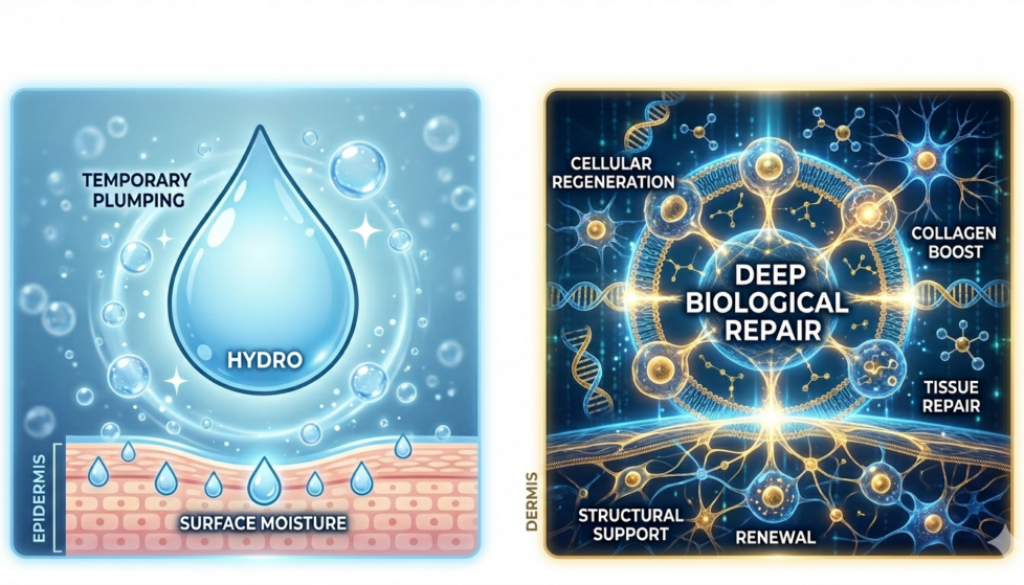
Most skincare products create fast visible improvement through hydration. Water is drawn into the outermost layer of the skin, temporarily plumps the surface cells and softens the appearance of texture and fine lines. The skin reflects light more evenly. This creates luminosity and the appearance of vitality.
It’s real. It’s also temporary.
Well-hydrated skin repairs itself better, maintains a stronger barrier, and is less reactive to environmental stress. Hydration alone cannot reverse skin aging or repair deep structural damage.
For a price, the beauty industry fills a gap between temporary cosmetic improvement and long-term biological change.
Your skin runs on your biology, not external marketing promises
Deep inside your skin, stem cells and repair cells are constantly working to maintain structure and function. These cells require energy to repair damage, build collagen, regulate inflammation, and renew the skin barrier.
Remember your mitochondria? Those tiny energy-producing structures inside your cells we met in this post in May on how to feed and nurture skin and mitochondria. They depend on healthy fats and lipid balance, antioxidants that neutralize oxidative stress and micronutrients and cofactors that support cellular repair. They thrive on stable blood sugar and reduced inflammation along with the basic musts of adequate hydration and sleep.
This helps explain why many expensive skincare products fail to create meaningful long-term change. Most topical products never penetrate deeply enough to significantly influence the cells responsible for regeneration. Others simply do not provide the biological ingredients skin cells actually need.
Resilience is less about how many products you apply to your skin and more on what you feed your cells so they can efficiently repair themselves.
What really influences skin’s capacity to repair? All the topics you have read or heard Dr. Moondust write about in posts on the website or in her books.
You can think of skin health as a whole-body biology wearing a visible face! And, here’s why….
Your Skin Records Every Summer
Your dermatologist would tell you they see aging in two ways:
- Chronological aging, or the natural aging process driven largely by genetics
- Photoaging, which is aging caused by cumulative environmental exposure, especially ultraviolet radiation.
Research suggests that up to 80% of visible facial aging is linked not to the passing of time itself, but to accumulated sun exposure over the years. Which process do you think you have it in your power to modify and help care for your skin’s youthful appearance and health?
UVA vs UVB: both matter
UVB rays are usually the rays most associated with scientific sunburn & ageing, but both types of UV light also cause apoptosis (sunburn with cell death or peeling), which is strongly associated with skin cancer. UVA/UVB directly damage DNA inside skin cells, which results in cell death in some (if the cells die) and ageing in others (if the cells do not die and just repair the damage).
Over time, repeated UV exposure leads to:
- loss of elasticity
- uneven pigmentation
- thinning skin
- fine lines and wrinkles
- impaired barrier function
- increased skin cancer risk
Importantly, this damage accumulates silently for years before it becomes visible but your skin has a cellular memory.
Special note on Heat: Sun protection covers you against UV radiation, but we often forget to talk about infrared heat. It penetrates deeply into the skin and activates many of the same inflammatory pathways associated with photoaging. Heat exposure also increases our skin’s loss of hydration faster in hot environments.
You do not need a visible burn for biological stress to occur. As previous Moondust summer posts have told us, exposure as we sit in traffic and feel the sun through the windshield, humid cities and prolonged outdoor activity contribute cumulative stress to the skin.
Summer skin damage is often a combination of UV exposure, heat exposure, dehydration, and inflammation happening simultaneously.
Inflammation: not always visible
Skin science tells us that even if you don’t visibly burn, your skin may still be inflamed. Even low-level UV exposure triggers inflammation. Immune cells activate. Cytokines are released. Skin’s barrier function is impaired, even subtly. So, chronic low-grade inflammation speeds up collagen breakdown, oxidative stress and those worrisome pigmentation irregularities.
Our skin becomes more sensitive and we appear to age prematurely, but inflammation also weakens the skin’s ability to repair future damage effectively. Being consistent with daily protection can even overcome occasional extreme exposure. Why? Because biology responds to cumulative patterns.
Melanin protects but doesn’t provide immunity
When skin is exposed to sunlight, melanocytes increase melanin production to help shield DNA from further injury.
While people with more melanin generally have greater natural protection against UV damage and lower rates of certain skin cancers, every skin tone benefits from sun protection. No skin tone is immune to sun damage, photoaging, pigmentation disorders, or skin cancer. Darker skin tones are often diagnosed later because both patients and healthcare providers may underestimate risk, so extra care must be taken.
Your Gut-Skin Connection Is Real
As far as our skin goes, the bacteria living in our digestive tract influence inflammation, skin’s integrity as a barrier, oxidative stress and even immune signaling and the amount of sebum that is produced.
Choose a Sunscreen That Actually Works
Of all skincare products ever studied, sunscreen has the strongest evidence base for preventing both visible aging and skin cancer. But effectiveness depends heavily on proper selection and use.
What to look for
- Broad-spectrum protection (covers both UVA and UVB)
- Suitable for your skin type (Take the Dr. Moondust sunscreen challenge to find out)
- Consistent daily use
- Reapplication every two hours in direct sun
The challenge is fun, free, fast and instantly informative for your suncare and protection.
Mineral vs chemical sunscreens
Both work well when properly formulated. (At this time Moondust Skin Protector Plus, which is formulated specially for those susceptible to scientific sunburn, is out of stock)
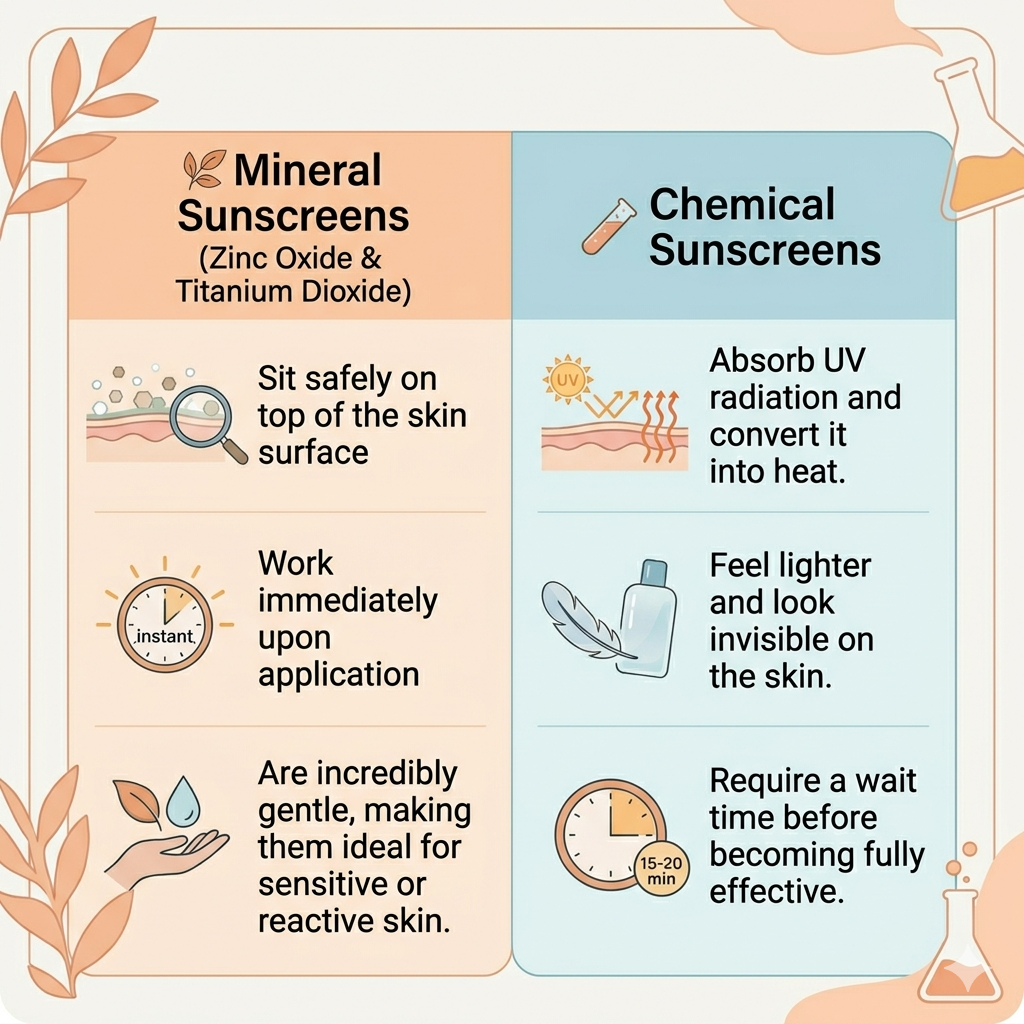
Mineral sunscreens (zinc oxide and titanium dioxide):
- sit on the skin surface
- work immediately
- tend to be gentler for sensitive skin
Chemical sunscreens
Absorb UV radiation and convert it into heat
- often feel lighter and more invisible
- require time after application before becoming fully effective
* May contain synthetic chemicals that have been associated with cancers
Less Can Be More
Dr. Moondust maintains that using too many products or overcomplicating skincare routines can damage the skin barrier. Too many acids, exfoliants, fragrances, and active ingredients.
Too much of any of these disrupts the microbiome and skin’s natural barrier to increase inflammation, worsen sensitivity and cause a chronic irritation. For a thoughtful and simple routine built around gentle cleansing, hydration and skin support view Dr. Moondust’s video.
See more posts on the foods, habits and lifestyle choices for glowing health Moondust Cosmetics® website.
Join us on social media
Facebook, Instagram, YouTube.
Drop a line to comment or send in a question (EMAIL) info@moondustcosmetics.com